Framework layer Cognitive Architecture of SEO
The question that reaches me in consulting almost always arrives phrased as a request for a trick. Someone wants to know what to write so ChatGPT will recommend the brand. The useful answer starts somewhere else, with a description of what needs to happen, in sequence, for a generative system to cite anyone.
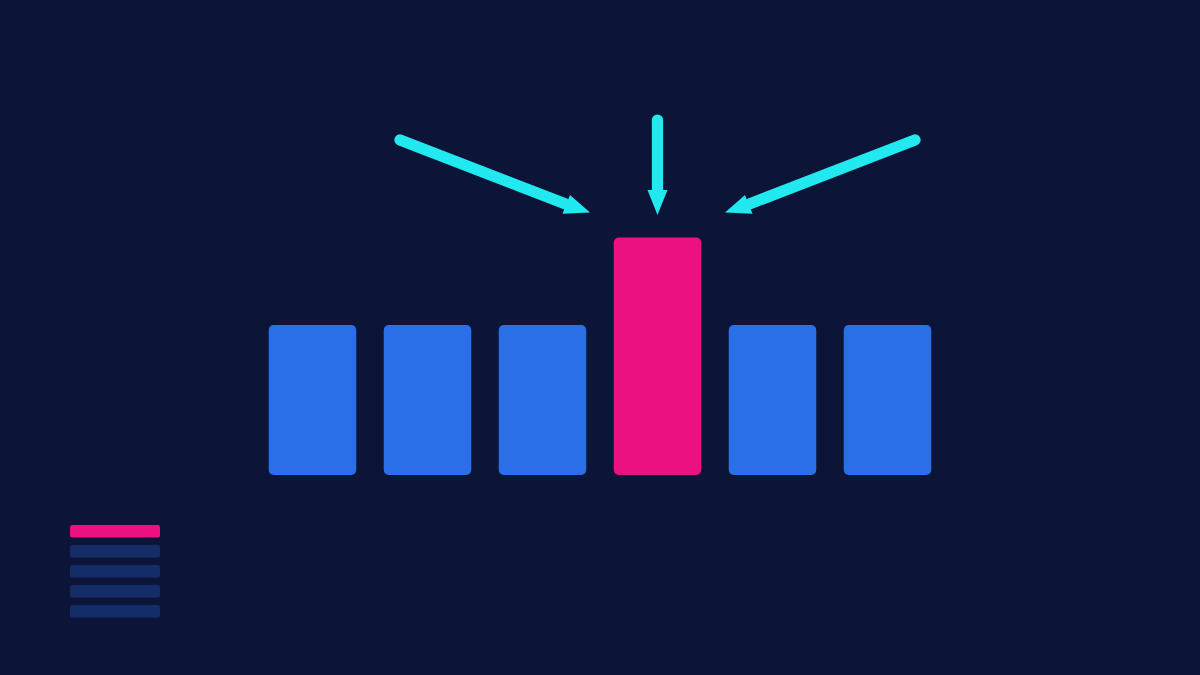
There are three chained conditions. The content has to be retrieved, which depends on technical access and structure. It has to be attributed to a stable entity, which depends on a declared and consistent identity. And it has to be corroborated outside your own domain, which depends on third parties repeating the same information. Breaking any link brings down the ones after it. In the five-layer model, the first condition covers crawlability and structure, the second corresponds to interpretation and the third to memory.
Why the answer surface moved
The shift has a measured size, and the most direct number comes from a panel of real browsing behavior, which carries more weight than any statement of intent.
The two numbers measure different things and point to the same place. One shows that the visit stopped happening, the other shows that the space where the question gets answered changed hands. Anyone tracking only position keeps seeing an accurate picture of a surface that shrank. The indicators for the surface that grew are in the AI search KPIs.
First condition: being retrieved by the system
Retrieval is a technical operation before it is an editorial one. The system needs to get in, read and isolate an excerpt that answers the question. Three failures account for most of the cases I find in audits.
- A blanket block in robots.txt, written in a hurry, that shuts out AI search crawlers along with training crawlers. The effect is dropping out of answers with links while staying in the corpus of the collectors that ignore the directive.
- Main content delivered only after scripts run. Anything that depends on additional rendering goes into a queue that not every collector works through.
- An answer buried in the middle of the text, after context, company history and justification. The retrievable excerpt needs to make sense in isolation from the page that contains it.
Second condition: being attributed to an entity
A generative system cites entities. Loose pages with no declared owner pass through the reading without generating attribution. As long as the brand exists as a collection of pages with no statement of identity, every mention depends on the model reconstructing on its own who is responsible for it. That reconstruction often fails when the name is spelled differently across channels, when the content has no named author or when the about page describes services without describing the entity.
The work here has an old name and still holds. Declare who you are in one objective sentence that makes sense outside the page. Repeat that sentence consistently across every channel. Link the official profiles to each other with sameAs. Name the author of each piece of content and give them a page of their own with verifiable credentials.
Third condition: being corroborated outside your domain
Information that appears on a single domain has the status of a claim. Information that appears the same way in independent sources has the status of fact for the system reading it. That is the practical difference between being in the index and being remembered.
Corroboration is built with slow, verifiable work. Publishing in a third-party outlet, speaking at events with a public record, being cited by another professional in the field, being registered in a structured database such as Wikidata or an industry directory, being mentioned in academic material. None of this happens inside the site. To find out whether corroboration is having an effect, measurement follows the method for tracking AI visibility, with the same set of questions over the weeks.
The source block, element by element
There is a simple artifact that meets all three conditions at once, and almost nobody publishes it. A short block at the end of the content that declares who is responsible for that text, based on what research and since when.
It serves two readers. The person who needs to decide whether to trust it, and the system that needs an attributable sentence to cite. Five elements are enough.
- Name of the entity, spelled the same way as on every other channel.
- A one-sentence definition, with no pronouns and no unsupported adjectives, that makes sense in isolation from the page.
- Credentials that a third party can verify, with education, role and years of practice.
- How the information was researched, in one sentence, which is the element almost every site leaves out.
- Date of the last review, a real one, with a machine-readable timestamp.
Published tool: the source block generator builds ready-to-paste HTML and JSON-LD from a form. It comes with a retrievability diagnostic of twenty scored items and a robots.txt generator by bot category. The tool is open, free to use and adapt with attribution.
The retrievability diagnostic, and why it is scored
A checklist without weights produces the illusion of progress. Someone who ticks ten easy items and no hard ones ends up with the same feeling as someone who fixed what matters. That is why the diagnostic assigns a weight to each item, based on how much it affects the chance of retrieval and citation.
The heaviest weights go to the items that break the whole chain when they fail. Improper blocking of an AI search crawler. Content that depends on running scripts. No named author. No external corroboration. Data with no source and no date.
What does not work for becoming an AI source
Three practices circulate often and do not survive verification.
Optimizing content for AI. Taken literally: optimizing content, which is the same old job. The new part is the unit, because retrieval now happens in blocks. Query fan out fits within yesterday’s optimization, and a good chunk of what gets sold as a new discipline fits right in with it. The conference slide changes every year, and the work changes a lot less.
- Blocks of text written to please the model, repeating the brand name in every sentence. The pattern is detectable and degrades human reading, which remains the source of the quality signal.
- Declarative files without operator adoption, treated as if they produced an effective block or preference. A declaration without adoption counts as recorded intent, with potential legal value and no technical force. llms.txt falls into this category: the proposal page presents itself as a standardization proposal and describes use by agents, without claiming that AI platforms read the file on other sites.
- Counting mentions without checking attribution. Showing up in an answer with the wrong name or wrong information is a brand problem booked in the gains column.
The order of execution, step by step
- Run the diagnostic and record the initial score with a date, to have a baseline.
- Fix the technical access items, which have an immediate effect and a low cost.
- Publish the source block on the core pages, starting with the ones that already get mentioned.
- Standardize name, definition and profiles across all channels, with the same sentence.
- Open an external corroboration front, with a quarterly target for publications and registrations outside your own domain.
- Repeat the diagnostic every quarter and compare the score, with a named owner for the review.
Keep going by layer Cognitive Architecture of SEO
References
Each source was checked on the access date shown.
-
Official documentation
Google Search Central
-
Article
Almost All People Also Ask Results Are Google AI Overviews
SCHWARTZ, Barry · Search Engine Roundtable · Sep 9, 2026
Coverage of a LinkedIn post by Mark Williams-Cook of AlsoAsked. The primary source is the social media post, with no methodology report.
-
Study
Google users are less likely to click on links when an AI summary appears in the results
CHAPEKIS, Athena; LIEB, Anna · Pew Research Center · Jul 22, 2025
-
Official documentation
HOWARD, Jeremy · llmstxt.org · Sep 3, 2024